
Proctor’s Three-Functions
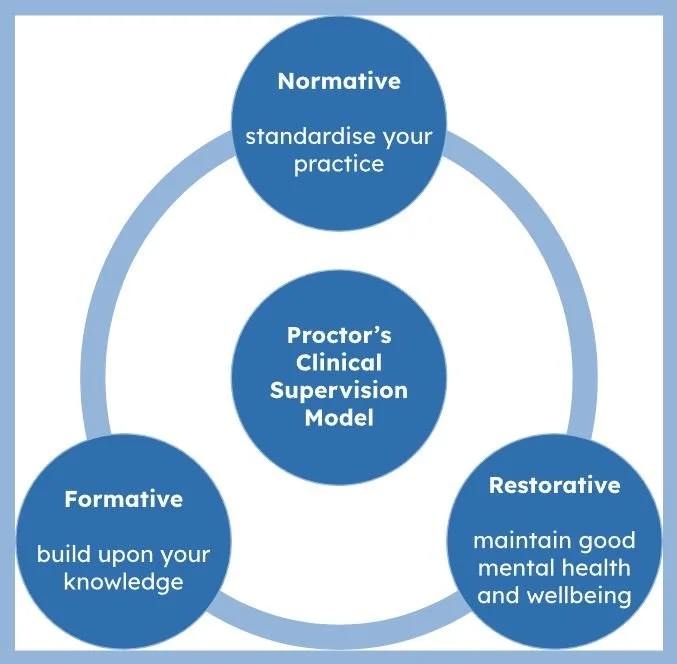
The Three-Function model was created by Brigid Proctor in 1986. It states that clinical supervision has three main cornerstones. Those are Normative, Formative and Restorative.
Normative
Refers to the stage of a supervision session that focuses on the assurance of a well managed and maintained professional standard that must be met
Formative
Refers to the stage of a supervision session that focuses on developing the supervisees skills and ability as a counsellor
Restorative
Refers to the stage of a supervision session that focuses on the health and wellbeing of the supervisee and making sure they are not being personally effected by the issues discussed with clients